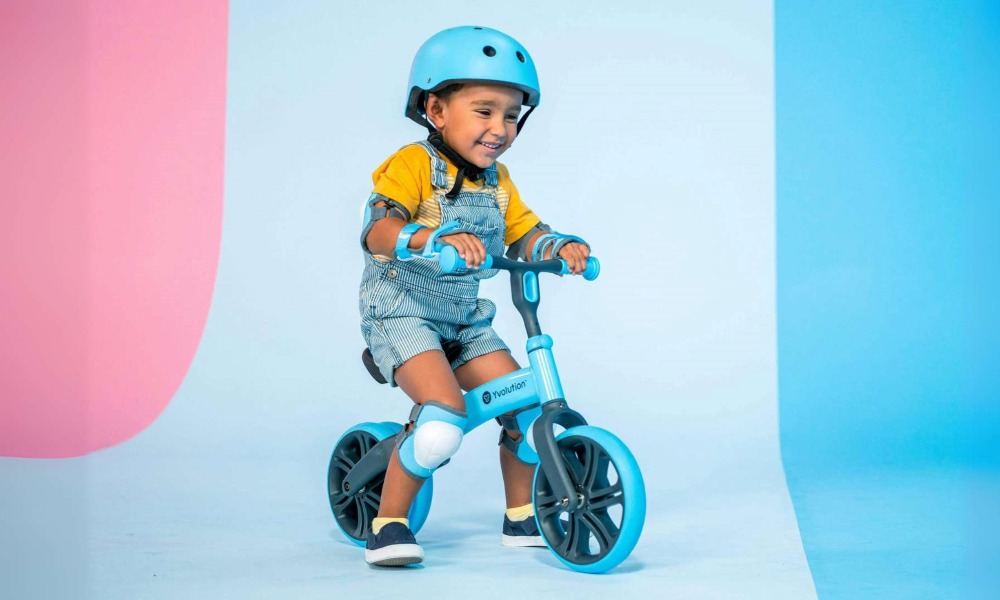
The journey of childhood development is marked by numerous milestones, and among the most exhilarating is the transition from crawling to walking, and eventually, to riding. But in today’s modern era, the concept of balance bikes has revolutionized how toddlers learn to navigate the world on two wheels. At the forefront of this innovation stands the Little Nation Balance Bike, a product designed to bridge the gap between early mobility and the exciting world of cycling.
Balance bikes have emerged as a crucial tool in developing a child’s sense of balance, coordination, and confidence. Unlike traditional training wheels, which can create a false sense of stability, balance bikes encourage children to rely on their own equilibrium, setting a strong foundation for future cycling skills. The Little Nation Balance Bike takes this concept a step further, catering to even younger riders and providing a safe, engaging platform for their first experiences with independent mobility.
In this vast consideration, we’ll explore the unique features of the Little Nation Balance Bike and delve into 4 compelling alternatives that have made their mark in the market. Each of these products brings its own set of innovations, from multi-wheel designs to growth-adaptable frames, all aimed at providing the best possible start for budding cyclists.
So let’s begin!
Quick Pick Section
Featured Product
| Product Name | Age Range | Color | Special Feature |
|---|---|---|---|
| Little Nation Baby Balance Bike | 18-24 months | Black | 135-degree steering limit |
4 Best Alternatives
| Product Name | Age Range | Color | Special Feature | Price | |
|---|---|---|---|---|---|
| SEREED Baby Balance Bike |  | 12-24 months | Green | 4 Wheels design | Check Price On Amazon |
| BEKILOLE Balance Bike |  | 1 year + | Pink | First Bike | Check Price On Amazon |
| Retrospec Cricket Baby Walker |  | 12-24 months | White | 4 Wheels walker | Check Price On Amazon |
| Wudola Baby Balance Bike |  | 10-36 months | Pink | Silence Wheels | Check Price On Amazon |
Featured Product
Little Nation Baby Balance Bike
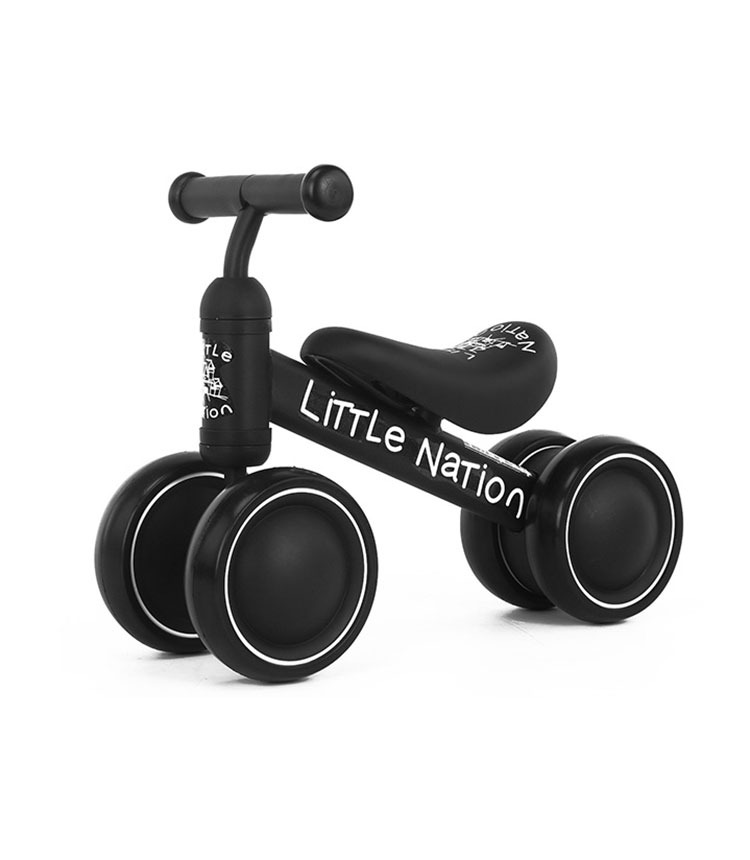
Key Specs
- Age Range: 18-24 months
- Color: Black
- Special Feature: 135-degree steering limit
The Little Nation Baby Balance Bike redefines early mobility for toddlers aged 18 to 24 months. This sleek black bike is engineered with a keen understanding of a young child’s developmental needs, offering a safe and engaging introduction to the world of cycling. The lightweight design is a standout feature, allowing even the smallest riders to maneuver the bike with ease, fostering a sense of independence and confidence.
Safety is paramount in the Little Nation’s design, evidenced by its innovative 135-degree steering limit. This thoughtful feature prevents oversteering, significantly reducing the risk of side falls – a common concern for parents of young riders. The absence of pedals further simplifies the riding experience, allowing children to focus solely on balance and coordination, crucial skills for future cycling proficiency.
Versatility shines through in this balance bike’s construction. Suitable for both indoor and outdoor use, it adapts seamlessly to various environments, making it an ideal year-round activity tool. The durable frame ensures longevity, capable of withstanding the inevitable tumbles of early learning. For parents seeking a reliable, safe, and developmentally appropriate first bike, the Little Nation Baby Balance Bike offers a comprehensive solution that grows with the child through those critical early months of mobility exploration.
4 Best Alternatives for 2026
1. SEREED Baby Balance Bike – Our Top Pick Alternative
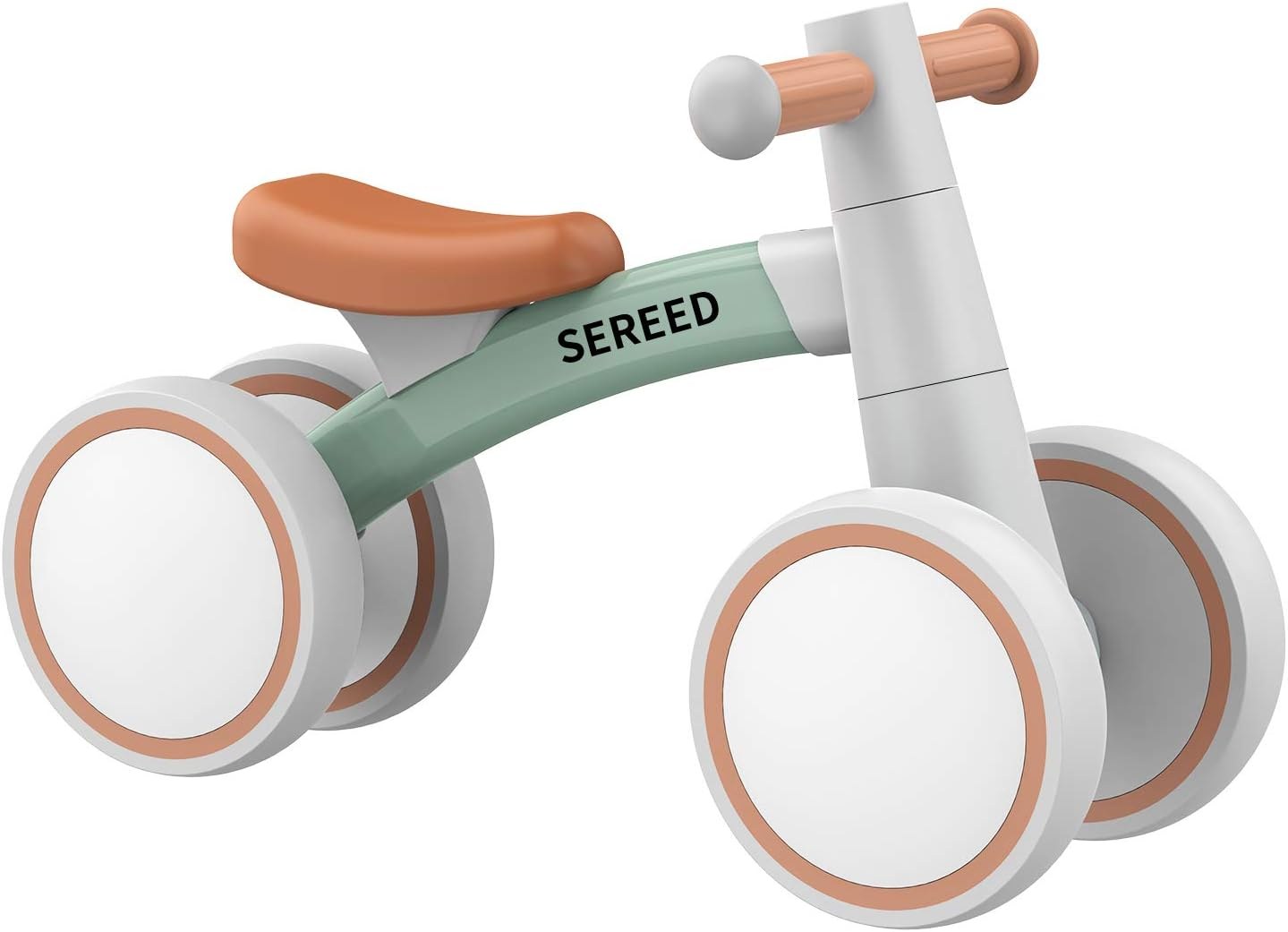
Key Specs
- Age Range: 12-24 months
- Color: Green
- Special Feature: 4 Wheels design
The SEREED Baby Balance Bike, our KD4U Top Pick Alternative Award winner, revolutionizes the concept of first bikes for the youngest riders. Designed for children aged 12-24 months, this vibrant green four-wheeled bike offers a stable platform for toddlers taking their first steps towards independent mobility. The quad-wheel design provides enhanced stability, instilling confidence in both children and parents during those initial wobbly attempts at riding.
Safety meets innovation in the SEREED’s construction. The low-to-the-ground design minimizes the risk of falls, while the rounded edges ensure that any bumps or tumbles are as gentle as possible. The bike’s frame is crafted from durable, child-safe materials, providing a sturdy yet lightweight structure that’s easy for little hands to maneuver. This thoughtful engineering makes it an ideal choice for indoor use, allowing year-round enjoyment and skill development.
Versatility is a key attribute of this balance bike. As one of the best balance bikes for toddlers, it serves not just as a riding toy but as a comprehensive developmental tool. The act of straddling, pushing, and steering the bike promotes gross motor skills, spatial awareness, and balance – all crucial elements in a child’s physical development. For parents seeking a safe, engaging, and developmentally appropriate first birthday gift, the SEREED Baby Balance Bike offers an excellent solution that combines fun with fundamental skill-building.
2. BEKILOLE Balance Bike – Runner Up Alternative
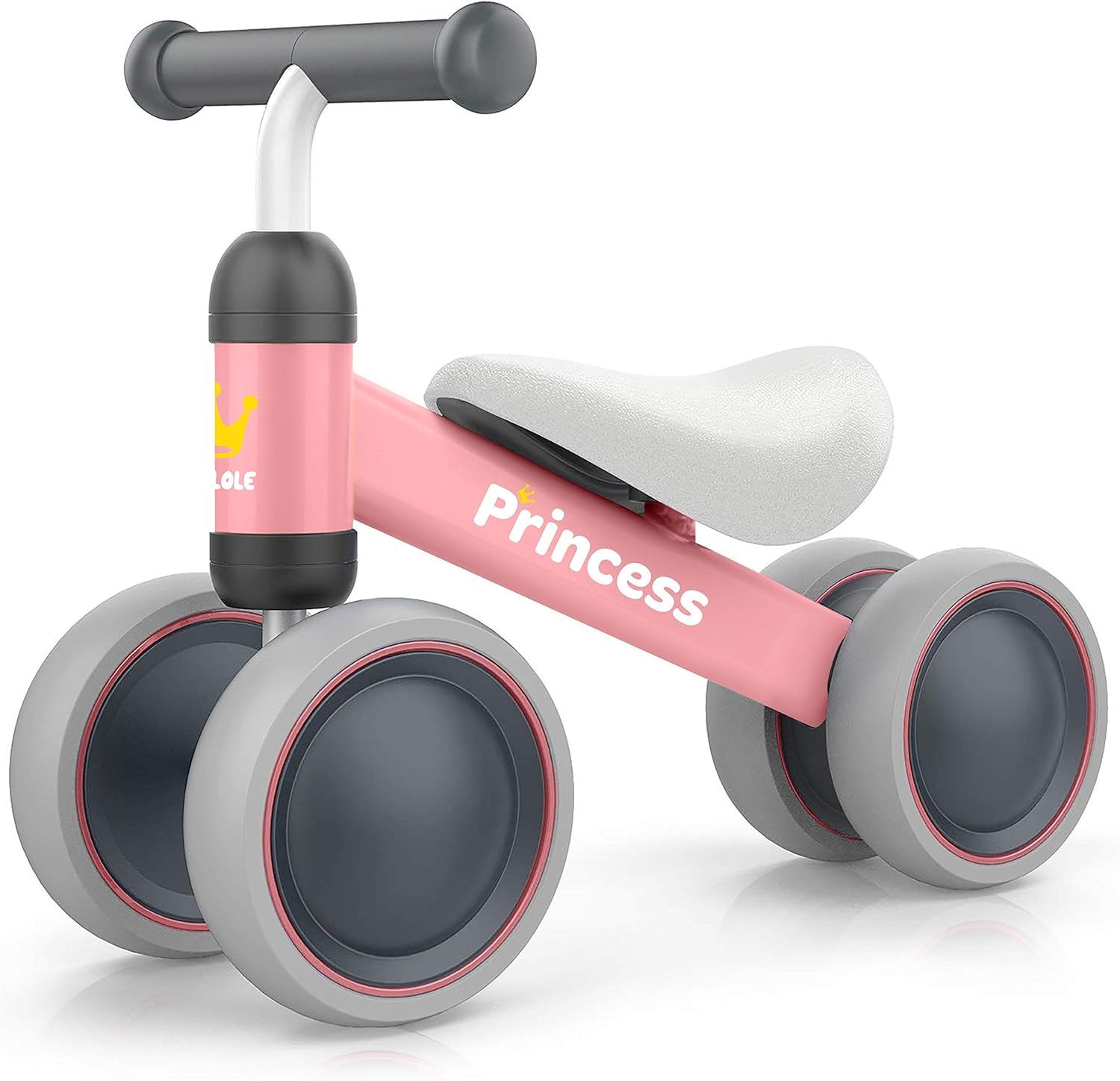
Key Specs
- Age Range: 1 year +
- Color: Pink
- Special Feature: First Bike
The BEKILOLE Balance Bike has earned our KD4U Runner Up Alternative Award for its innovative approach to early cycling education. Designed for children as young as one year old, this pink preschool first bike bridges the gap between standing and running, offering a unique solution for parents eager to nurture their child’s physical development. Its design focuses on gradual skill progression, making it an ideal 1st birthday gift that continues to provide value as the child grows.
Adaptability is at the core of the BEKILOLE’s design philosophy. The bike’s structure allows for adjustments to accommodate a growing child, ensuring longevity of use and value for money. The lightweight frame is easily manageable for young children, promoting independence and confidence as they learn to balance and steer. Safety features are thoughtfully integrated, with a low center of gravity and sturdy construction to minimize the risk of toppling.
Educational value sets this balance bike apart. Beyond physical skills, it encourages spatial awareness, decision-making, and early risk assessment – crucial cognitive developments in early childhood. The engaging design and cheerful pink color make it an attractive toy for young children, encouraging frequent use and consistent skill development. For parents looking to invest in a versatile, growth-oriented riding toy, the BEKILOLE Balance Bike offers a comprehensive solution that supports a child’s journey from first steps to first pedals.
3. Retrospec Cricket Baby Walker – Great Design Alternative
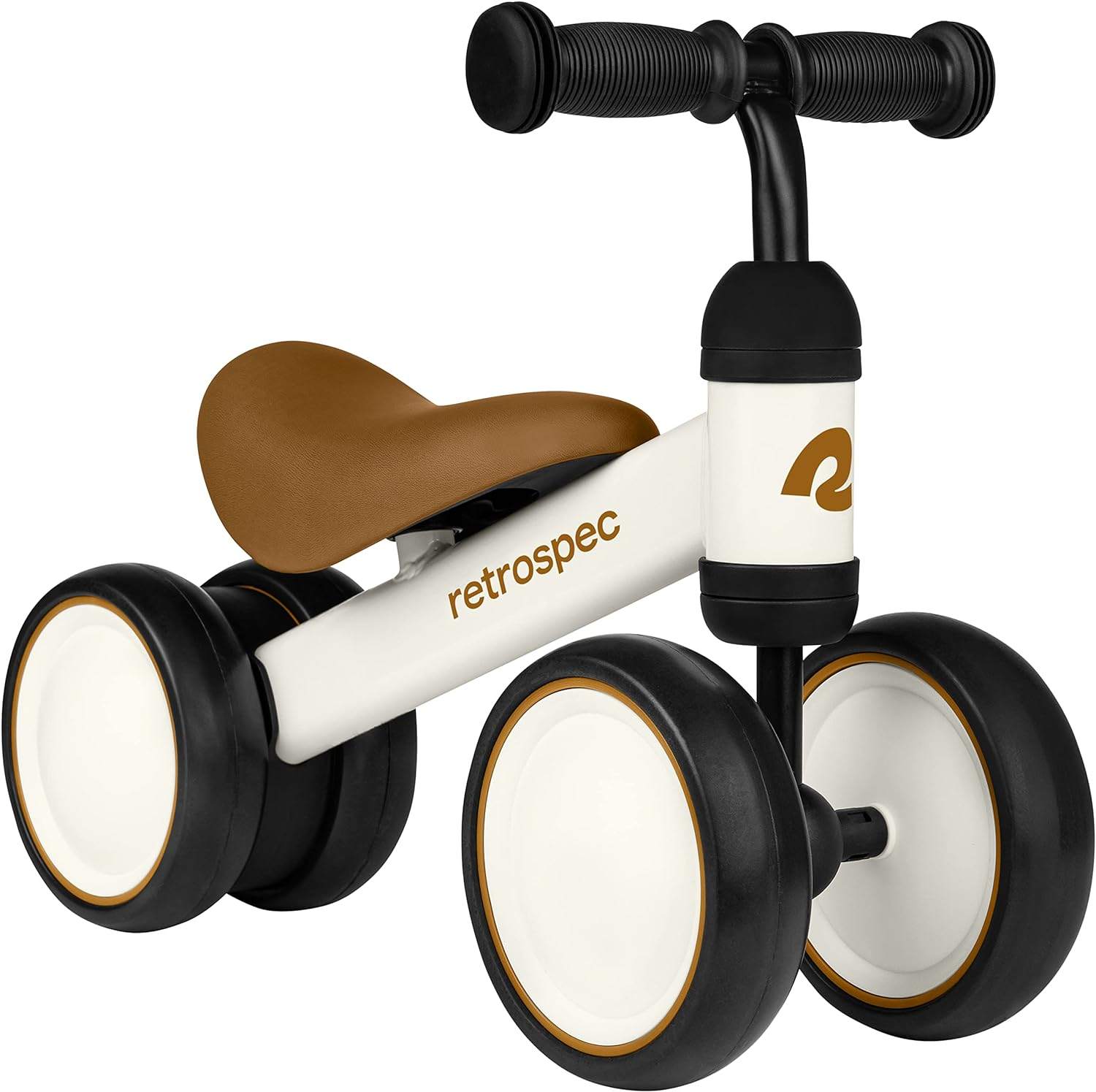
Key Specs
- Age Range: 12-24 months
- Color: White
- Special Feature: 4 Wheels walker
The Retrospec Cricket Baby Walker has achieved the KD4U Great Design Alternative Award for its thoughtful blend of functionality and aesthetics. This white balance bike, designed for toddlers aged 12-24 months, reimagines the traditional baby walker by incorporating elements of a balance bike. The result is a versatile 4-wheeled vehicle that supports a child’s transition from assisted walking to independent mobility.
Innovation shines through in the Cricket’s design. The four-wheel configuration provides superior stability, allowing even the most hesitant toddlers to gain confidence in their movements. The bike’s structure encourages an intuitive lean-to-steer mechanism, subtly introducing the concepts of balance and direction that will be crucial for future cycling endeavors. The sleek white design is not just visually appealing but also gender-neutral, making it a perfect choice for any child.
Practicality meets developmental benefits in this balance bike. The sturdy construction ensures durability, capable of withstanding the inevitable bumps and tumbles of early childhood exploration. Its design supports various developmental milestones, from improving gross motor skills to enhancing spatial awareness. For parents seeking a kids bike that doubles as a developmental tool, the Retrospec Cricket Baby Walker offers an elegant solution that grows with the child, supporting their journey from first steps to first rides.
4. Wudola Baby Balance Bike – Best Value Alternative
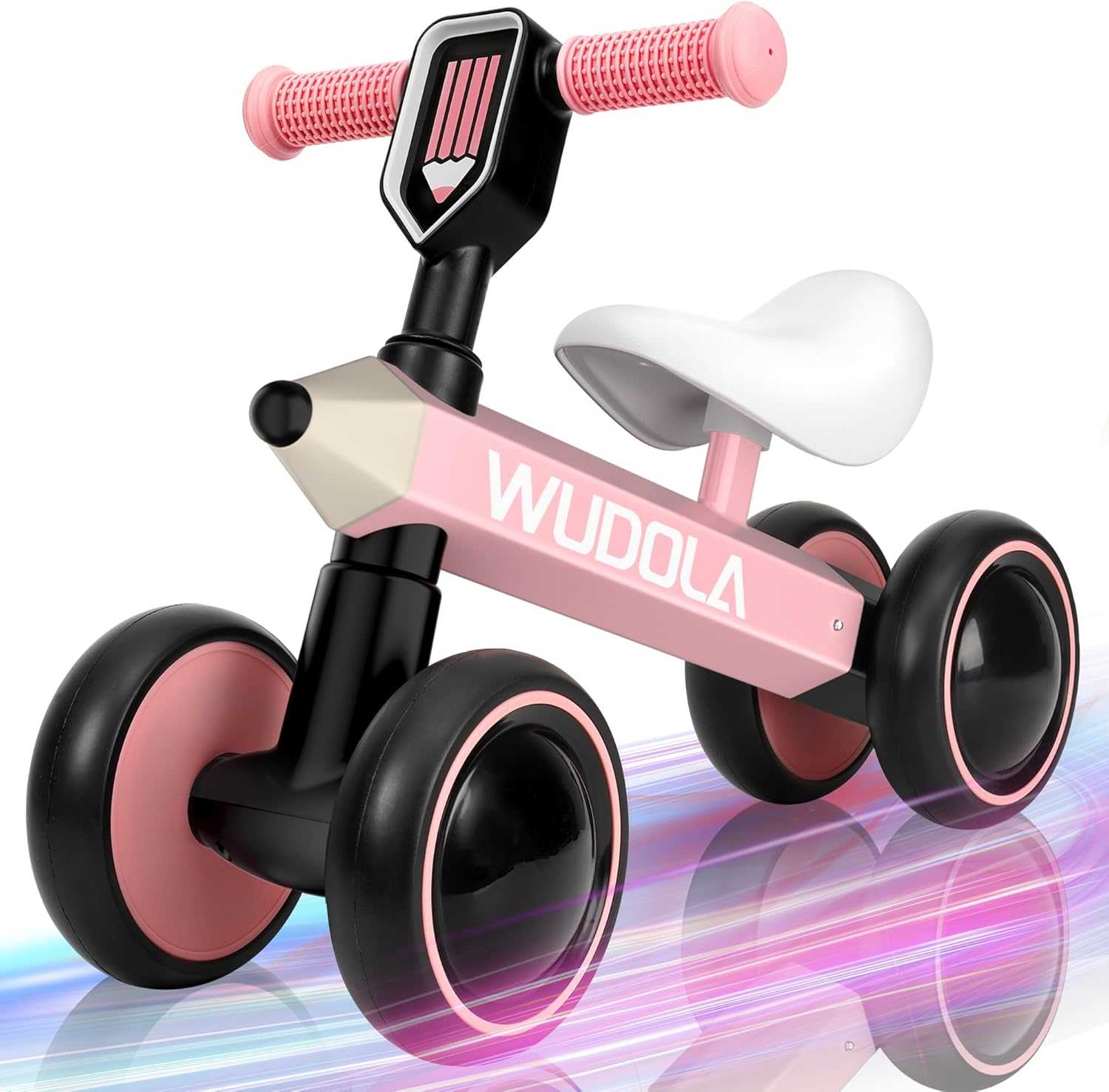

Key Specs
- Age Range: 10-36 months
- Color: Pink
- Special Feature: Silence Wheels
The Wudola Baby Balance Bike has earned the KD4U Best Value Alternative Award, offering an impressive array of features at an accessible price point. This pink balance bike, designed for children aged 10-36 months, provides an extended period of use, making it an excellent investment for growing families. Its design focuses on providing a safe, enjoyable introduction to cycling, making it an ideal birthday gift for boys and girls alike.
Safety and comfort are paramount in the Wudola’s construction. The four silent wheels ensure smooth, quiet operation, perfect for indoor use without disrupting the household. The soft seat provides comfort during extended play sessions, encouraging longer periods of engagement and skill development. The no-pedal design allows children to focus solely on balance and steering, building a strong foundation for future cycling skills.
Versatility is a key attribute of this balance bike. Its lightweight frame is easily manageable for young children, promoting independence and confidence. The bike’s structure supports various riding styles, from seated gliding to standing scooting, adapting to the child’s developing skills and preferences. For parents seeking a cost-effective, adaptable riding solution that supports long-term development, the Wudola Baby Balance Bike offers exceptional value without compromising on quality or safety features.
Our Selection Process
In selecting the top balance bikes for 2026, including the Little Nation Balance Bike and 4 exceptional alternatives, we adopted a detailed and multifaceted approach. Our process began with extensive market research, identifying the latest innovations and trends in balance bike design. We prioritized customer reviews, gathering insights from parents who have firsthand experience with these bikes, focusing on aspects like durability, ease of assembly, and child-friendliness.
Expert opinions from child development specialists were integral, helping us evaluate safety features, ergonomic design, and the bikes’ ability to aid in developing balance and coordination. We also considered the materials used, favoring bikes made from high-quality, non-toxic, and environmentally friendly components.
Design and aesthetics were scrutinized to ensure a visually appealing and engaging product for children. Pricing was another key factor, ensuring a diverse range of options that offer excellent value for money. This thorough selection process ensures that our recommended balance bikes meet the highest standards of quality, safety, and enjoyment.
Buying Guide Tips
1. Age and Size Appropriateness
Choose a balance bike that fits your child’s current age and size, with room for growth. Look for adjustable seat heights to accommodate your child as they grow. Consider the bike’s weight – it should be light enough for your child to maneuver easily. Check the recommended age range and weight limit provided by the manufacturer. Ensure the bike allows your child’s feet to touch the ground comfortably when seated.
2. Safety Features
Prioritize bikes with rounded edges and covered bolts to prevent injuries. Look for models with steering limiters to prevent oversteering. Check for non-slip handlebars and footrests for added stability. Consider bikes with enclosed wheels to protect little fingers. Ensure the bike meets current safety standards and certifications. Look for models with hand brakes for older toddlers to introduce the concept of speed control.
3. Construction and Durability
Opt for bikes made from sturdy, lightweight materials like aluminum or high-quality plastic. Check the quality of wheels; air-filled tires offer better cushioning, while foam tires are maintenance-free. Look for bikes with sealed bearings to protect against dirt and extend the bike’s lifespan. Consider the frame design with a lower center of gravity provides better stability. Check user reviews for long-term durability feedback.
4. Ergonomics and Comfort
Look for bikes with ergonomically designed seats to support proper posture. Consider models with padded seats for extended comfort during longer rides. Check for adjustable handlebars to accommodate your child’s growing reach. Look for bikes with textured footrests to prevent slipping. Consider the overall design that should encourage a natural riding position. For younger toddlers, consider models with backrests for added support.
FAQs
1. At what age should my child start using a balance bike?
Most children can start using a balance bike between 18 months and 2 years old when they can walk confidently. However, some models are designed for children as young as 10 months. The right age depends on your child’s physical development and confidence. Always supervise your child when they’re using the bike, regardless of age.
2. How do I choose the right size balance bike for my child?
Ensure your child can sit on the seat with both feet flat on the ground. There should be a slight bend in their knees when seated. Check that they can reach the handlebars comfortably without stretching. Most balance bikes have adjustable seats and handlebars to accommodate growth. Measure your child’s inseam and compare it to the bike’s minimum seat height for the best fit.
3. Are balance bikes better than training wheels for learning to ride?
Balance bikes are generally considered more effective than training wheels for developing cycling skills. They teach balance and steering, which are crucial for independent cycling. Training wheels can create a false sense of stability. Children who start with balance bikes often transition to pedal bikes more easily and quickly than those who use training wheels.
4. How long do children typically use balance bikes before moving to pedal bikes?
The duration varies, but most children use balance bikes for 1-2 years before transitioning to pedal bikes. Some children may be ready for pedal bikes as early as 3 years old, while others might use balance bikes until age 5 or 6. The transition depends on the child’s confidence, balance skills, and physical development.
5. Can balance bikes be used indoors?
Many balance bikes, especially those designed for younger toddlers, are suitable for indoor use. Look for models with quiet, non-marking wheels to protect your floors. Indoor use can be great for year-round skill development and is often safer for very young riders. However, ensure you have enough space for the child to maneuver safely indoors.
Final Thoughts
In conclusion, choosing the right balance bike for your child involves considering multiple factors such as age, size, safety features, construction, durability, and ergonomics. The comprehensive approach we’ve adopted ensures that each recommended bike meets stringent criteria, promising a blend of quality, safety, and enjoyment.
With insights from market research, customer reviews, and expert opinions, our guide provides a reliable selection to help parents make an informed decision. By focusing on features like adjustability, lightweight materials, ergonomic design, and crucial safety standards, we aim to support your child’s developmental journey from their first ride onwards.
Remember, balance bikes offer significant benefits over traditional training wheels, fostering essential skills such as balance and coordination that ease the transition to pedal bikes. Whether your child is starting as early as 18 months or a little later, a well-chosen balance bike can provide hours of fun and critical developmental advantages.